Army aftermath • September 12, 2026
MVB Saved the Day. Why Did Beck's Offense Need Saving?
South Florida escaped Army, 28–24. The finish was electric. The offense should not need a crisis to find its pulse.
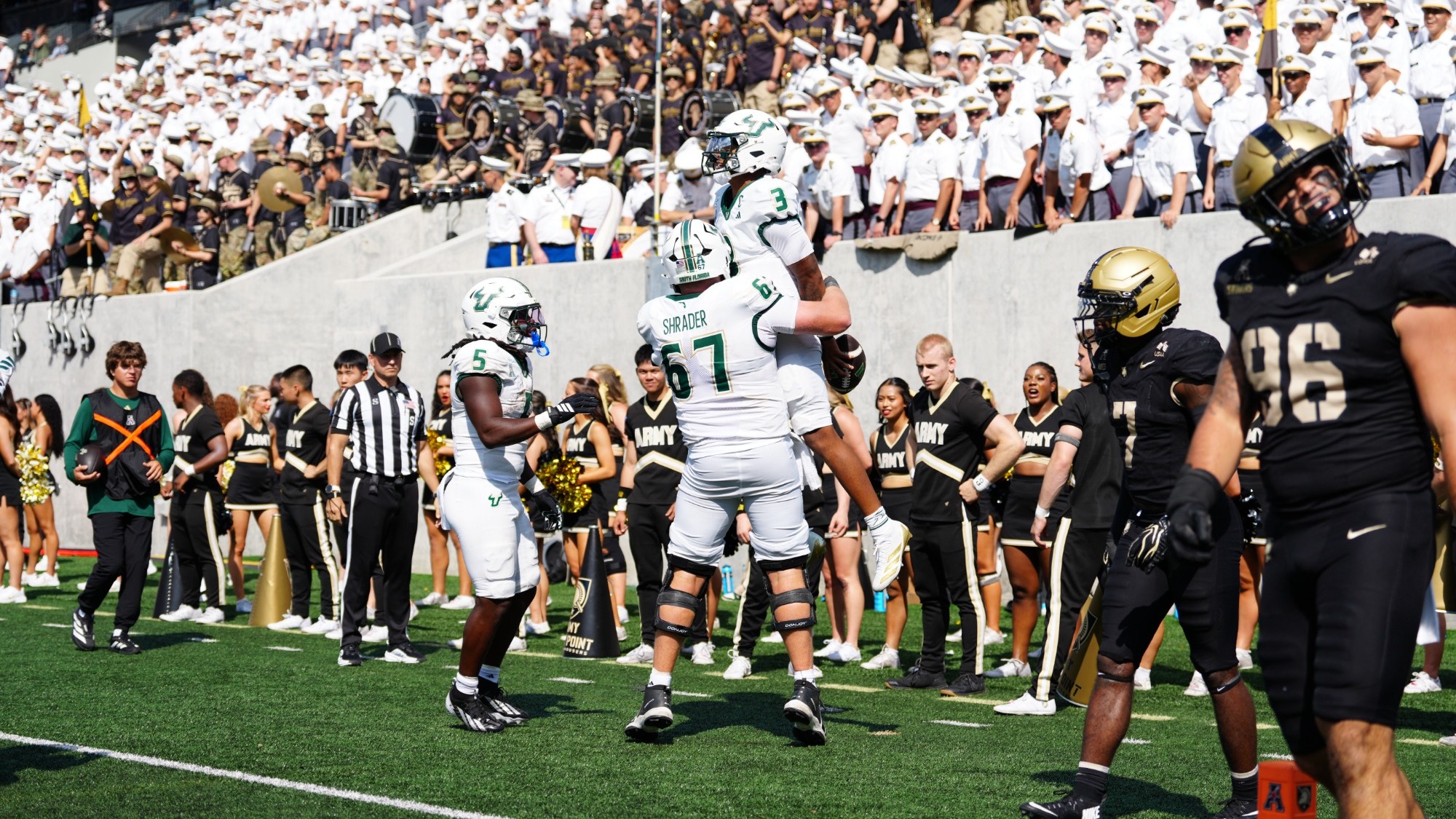
Michael Van Buren delivered the throw. Joshua Porter delivered the catch. South Florida delivered a finish that sent Bulls fans straight from misery to madness.
Fourth-and-6. Game on the line. A 38-yard touchdown with 19 seconds left.
Celebrate that. Scream about it. Watch it again.
Then ask the question that the celebration should not bury:
Why did this offense wait until disaster was staring it in the face to get moving?
AP game report: the winning throw
A touchdown, then the frustration
South Florida's opening possession showed what was possible: seven plays, 75 yards, touchdown.
Van Buren completed all three of his passes on that drive. This was not an offense that needed an entire afternoon to discover whether its quarterback could throw.
Yet the Bulls had only 14 points when Army stretched its lead to 24–14 with five minutes remaining. The opening promise had turned into another afternoon of waiting for the offense to wake up.
South Florida Athletics: game recap
One third-quarter possession summed up the frustration: a run for no gain, a run for a loss, then a completion short of the sticks. Three plays. Five yards. Punt.
Against Army, empty possessions are expensive. You hand over the ball and may spend the next several minutes watching the clock disappear.
Beck's offense cannot keep treating urgency like an emergency feature.
Suddenly, moving the ball was possible
The final two South Florida possessions covered 156 yards and produced 14 points.
That is roughly 42% of the Bulls' total offensive yardage, packed into two late drives.
On the first, Van Buren completed five straight passes before taking off for a 24-yard touchdown. On the last, he finished an 81-yard march by finding Porter for the winner.
Official play-by-play and statistics. Yardage share calculated as 156 divided by 369.
The obvious fan question is not complicated:
If this quarterback can do that when everybody knows South Florida needs to throw, why does the offense spend stretches looking afraid to ask?
The finish should be the standard the staff builds toward, not an escape hatch it opens after falling behind.
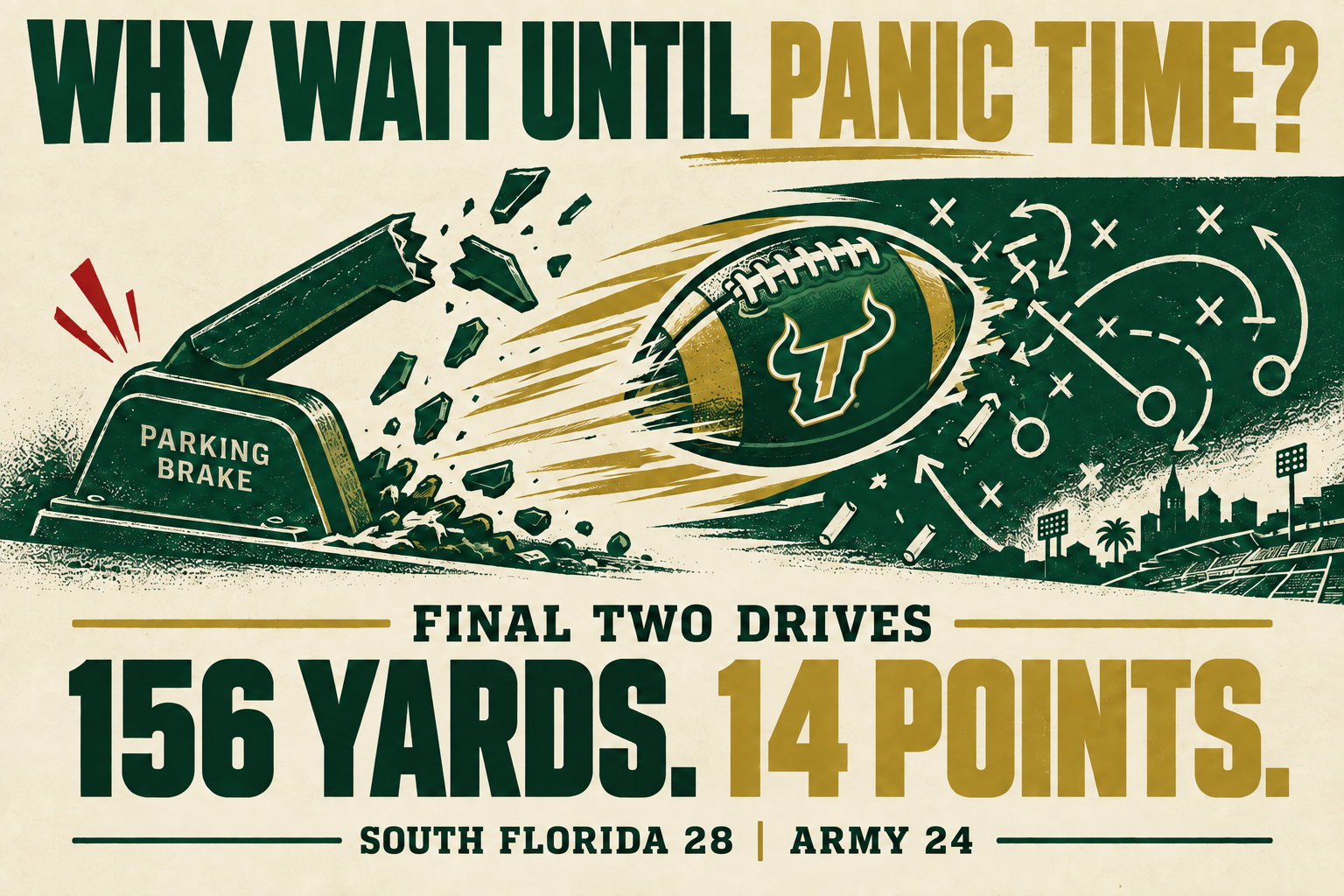
Hartline's gamble paid off. The clock questions remain.
Hartline deserves credit for the decision to go for the winning touchdown. South Florida put the game in Van Buren's hands instead of settling for a long field-goal attempt to tie.
That was the right kind of aggression.
But the finish does not erase questions about managing the clock. Before halftime, Army consumed 9:57 on a touchdown drive, leaving South Florida just 13 seconds. The Bulls then knelt out the half. That sequence deserves scrutiny, not a free pass because the ending was happy.
Official gamebook: first-half possession and final sequence
Beck knew the clock was coming for him
Nicolas Villamil's Tampa Bay Times report recalls Beck's warning before the game: Army would limit possessions, making each chance count. Beck said:
“We have to make third downs count. We have to score touchdowns in the red zone.”
— Tim Beck, speaking Wednesday, quoted by the Tampa Bay Times
So this was not a surprise exam. Beck knew possessions would be precious. That makes the empty ones harder to stomach.
The Times credits Hartline for keeping the offense on the field at the end and describes a stronger offensive showing than in the opener. Our question remains: why did South Florida need a last-minute rescue to turn that progress into a win?
The Times calls the final down fourth-and-5; the official gamebook lists fourth-and-6, which is the figure used here. Neither the Times report nor the official recap establishes a play-calling takeover.
Fans loved the rescue. They questioned the ride.
The postgame reaction was not just celebration.
“I enjoyed the fourth quarter when we actually let Van Buren throw and opened up the playbook. Amazing how much better the offense was.”
— u/PlatypusPuncher, Reddit postgame discussion
“Praying someone asks who was calling the plays at the end.”
— u/Sean082099, Reddit postgame discussion
That is a question, not proof of a play-calling change. But it captures how different the finish felt to some viewers.
“Hoping we start throwing it more but the WRs need to catch somehow.”
— Rocky Style, The Bulls Pen game thread
That points to another part of the problem: the passing game needs execution as well as opportunity.
Fans can love the result without pretending they loved the approach.
The finish, in pictures
See Joshua Porter's catch in the official gallery. Photo by Stephen Galvin / University of South Florida Athletics.
A win is not an answer to every question
This was not four quarters of hopeless offense. It was something more frustrating: clear flashes of what South Florida could do, interrupted by stretches that made the finish far harder than it needed to be.
Beck does not get to use the final touchdown as a curtain over everything that came before it.
Keep the win. Keep the nerve. Lose the handbrake.